ServicesCarpet Tile
Carpet Tile Installation in Missouri City
Carpet tile gives you a soft floor you can fix one square at a time. We check and prep the slab, lay the tiles straight and tight, leave you spares for later and clean up before we head out.
A soft floor that forgives spills
Carpet tile comes in squares or planks with a firm backing that holds its shape. When juice hits the playroom floor or the dog has an accident, you lift out the stained piece and press in a spare. No patched seams, and no replacing a whole room of carpet over one bad spot.
It is a good fit for game rooms, kids' rooms, home offices and home gyms. It is a weaker fit for a formal living room where you want that deep, wall-to-wall feel. For those rooms, our carpet installation work is usually the better answer, and we'll tell you so.
Most homes around Missouri City sit on concrete slabs, and slabs can push moisture up into the floor. We check for that first, because damp concrete is what loosens adhesive and lets tiles curl at the edges.
What our carpet tile work covers
- Taking out the existing flooring
- Whatever is down now comes out first, whether that's carpet with its padding and the nailed strips around the edges or old sheet vinyl that needs scraping. All of it leaves with us. Those edge strips leave small nail holes in the concrete, and we fill every one so they don't show through the new floor.
- Slab and subfloor prep
- We check flatness with a straightedge, then grind high spots and fill low ones. Carpet tile is thin, so a ridge in the concrete shows through as a line across the room.
- Moisture testing
- We test the slab before choosing an adhesive. If readings run high, we talk with you about a moisture-tolerant adhesive or a sealer instead of hoping for the best.
- Layout and pattern
- We find the center of the room and plan cuts so you don't end up with thin slivers at a doorway. You pick the look: monolithic with every arrow the same way, quarter-turn checkerboard or brick-style ashlar.
- Doorways and transitions
- Door jambs get undercut so tiles slide under cleanly. Where carpet tile meets tile, LVP or hardwood, we set a transition strip at the right height so nobody catches a toe.
- Spares and cleanup
- Leftover full tiles from the same dye lot get boxed and labeled for you. Then we vacuum, wipe the baseboards and take the scraps with us.
Signs carpet tile might suit your room
Stains keep winning
If you've rented a carpet cleaner twice this year for the same room, a floor you can repair piece by piece will save you a lot of frustration.
Pets or little kids use the room hard
Accidents tend to happen in the same spots. With carpet tile, the square by the back door can be swapped in minutes, and nobody can tell where the patch was.
Your carpet ripples or shows worn paths
Wall-to-wall carpet stretches over time and wears in traffic lanes. Carpet tile is held down with adhesive, so it doesn't ripple.
Hard floors feel cold and loud
A home office or playroom with tile or LVP can echo. Carpet tile quiets the room and is easier on knees during floor play.
The room's job keeps changing
A nursery turns into a homework room, then a workout space. Sections of carpet tile can be changed as the room changes.
What affects the cost of carpet tile
Two rooms of the same size can price quite differently. Most of the difference comes from what's under the old floor and which tile you choose. Each piece of the job gets its own line on our estimate, so nothing is lumped together or tucked away.
The tile and backing you pick
Thicker yarns and cushioned backings cost more than thin, firm-backed tiles. Cushion feels nicer in a playroom, while a firm backing holds up better under a rolling desk chair.
Removing what's there now
Carpet and pad come up quickly. Old glue-down vinyl or heavy adhesive residue takes more scraping and grinding.
Slab condition and moisture
Cracks, high spots and damp concrete all add prep time and sometimes a sealer. We show you what we found before anything gets added.
Room shape and pattern
A plain rectangle wastes few tiles. Closets, angled walls, built-ins and ashlar layouts mean more cuts and more material.
How a carpet tile job goes
- 1
Walk-through and measuring
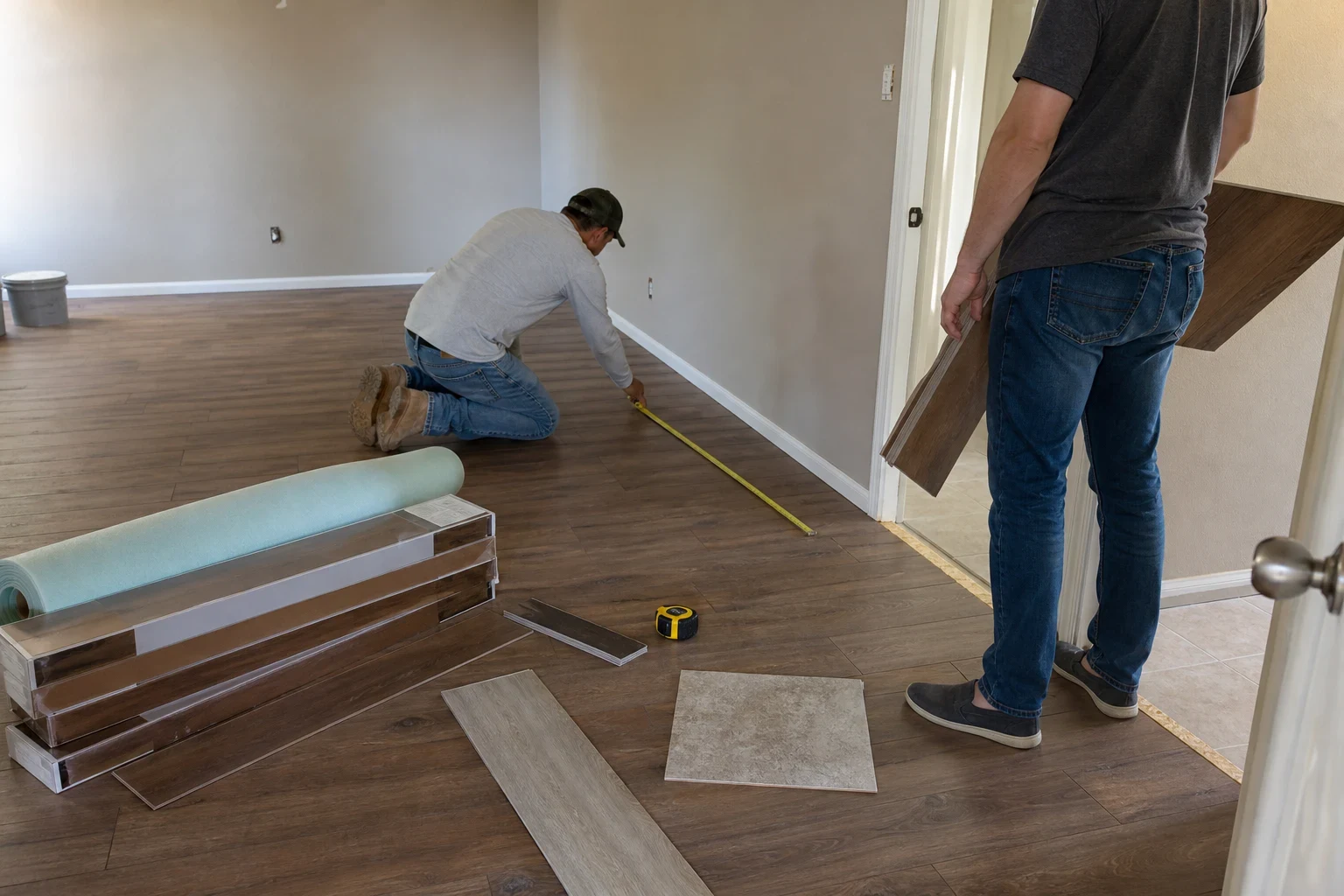
We come out, measure each room, look at the slab and ask how the space gets used. You get a written estimate with removal, prep, materials and labor on separate lines.
- 2
Ordering and acclimation
We order tiles from a single dye lot with extra for cuts and spares. The boxes sit in the room for a day or so first, so the tiles settle to your home's temperature.
- 3
Clearing and prep
We treat your home the way we'd want a neighbor to treat ours. We move the furniture we agreed on, cover nearby floors, remove the old flooring and get the slab clean and flat.
- 4
Laying the tiles
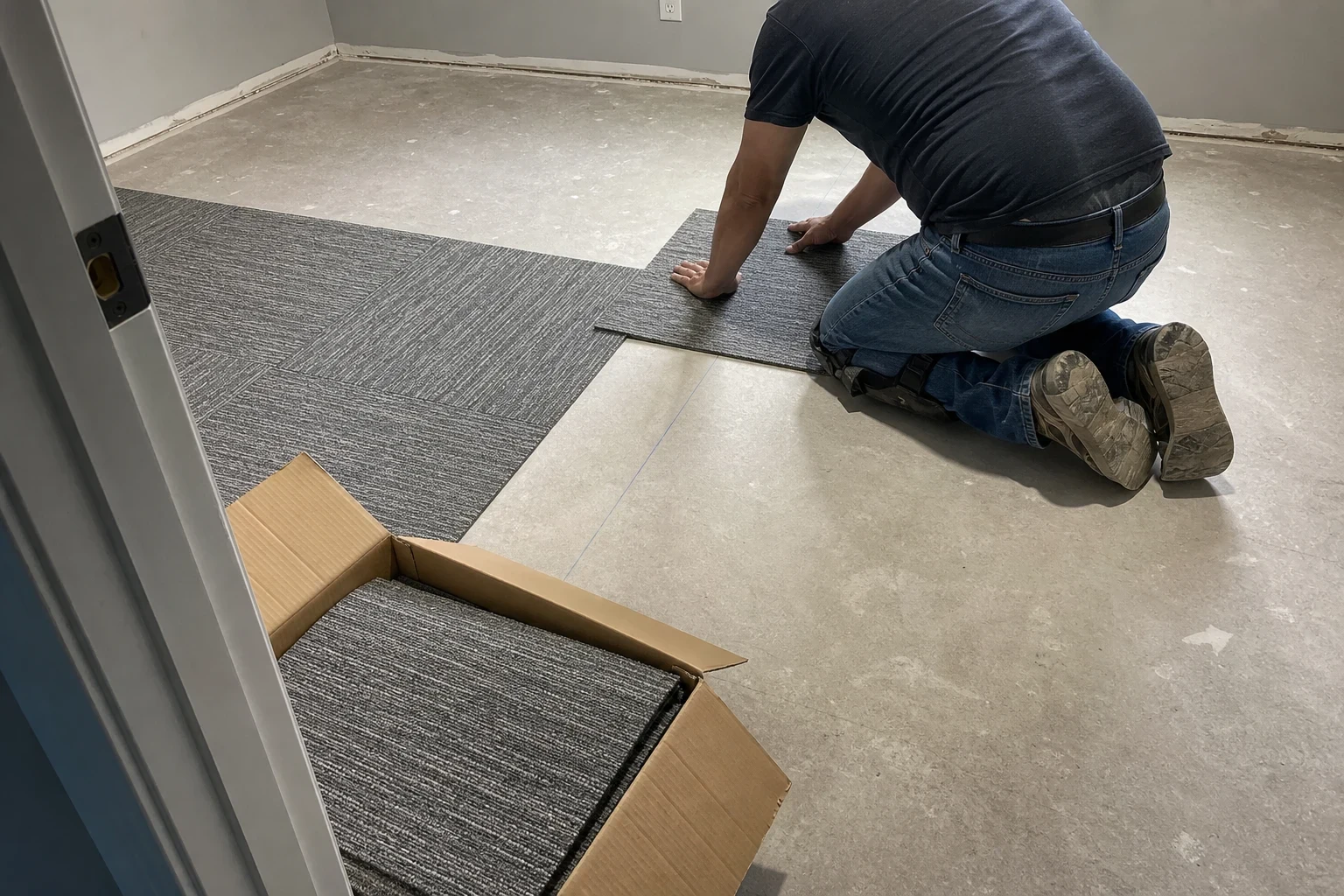
We snap chalk lines from the center, spread adhesive and let it tack up, then set each tile tight to the next with the arrows matching your pattern. Edges are cut by hand against walls and cabinets.
- 5
A final look together
We roll the floor, put furniture back, clean up and walk the room with you. Most rooms can be used right away, and we'll tell you if anything heavy should wait.
Carpet tile questions we hear
Will the seams show?
Up close, a little, depending on the style. Patterned and multicolored tiles hide seams best, while solid colors laid monolithic show more lines. We'll set samples on your floor so you can see before you decide.
Can I really replace just one tile?
Yes. Most carpet tile for homes goes down with a release-style adhesive that holds tiles firmly but lets you lift one out. You peel up the damaged piece and press a spare into its place. That's why we leave you labeled spares from the same dye lot.
Does carpet tile work on a concrete slab?
It works well on slabs once moisture is checked and the surface is flat. If the slab tests damp, we use an adhesive rated for higher moisture or seal the slab first. Skipping that step is the most common reason carpet tile lets go.
How does it compare to regular carpet?
Wall-to-wall carpet over pad is softer and has no visible seams, which suits bedrooms. Carpet tile is firmer, easier to repair and doesn't ripple. Plenty of families use both, with carpet in the bedrooms and carpet tile in the game room.
Can you put carpet tile on stairs?
We usually don't recommend it, because tiles don't wrap a stair nose cleanly and can lift at the edge. Our stair flooring work uses materials made to wrap or cap each tread safely.
How do I keep it clean?
Vacuum regularly and blot spills right away. A spot cleaner made for carpet works fine. If a stain still won't come out, that's the moment to swap in a spare.
Let's plan your room together
Tell us which room you have in mind and how your family uses it. We'll come look, check the floor underneath and give you a clear written estimate.