ServicesTile Flooring
Tile Flooring in Missouri City
We install porcelain and ceramic tile in kitchens, bathrooms, entries and whole living areas. Before any tile goes down, we check your slab for cracks and high spots and fix what we find. You get a floor that stays flat, sealed and easy to clean for years.
Where Tile Makes the Most Sense
Few floors stand up to splashes, pet accidents and wet shoes the way tile does. Porcelain is dense and soaks up very little water, which is why we often suggest it for bathrooms, laundry rooms and kitchens. Ceramic is a bit softer and is often the less expensive choice, so it works nicely on walls, backsplashes and rooms with lighter foot traffic.
Tile is only as good as the base beneath it. Many houses around here sit on concrete slabs, and the expansive soil under them moves between the wet months and the dry ones. If the prep gets rushed, that movement shows up later as cracked tile and broken grout lines. We take our time on the slab before any thinset gets mixed.
If you want something warmer or softer, we will tell you so. Luxury Vinyl Tile gives a similar look with more give underfoot, and we are happy to walk you through both.
What Your Tile Installation Includes
Taking out the old floor
Whatever is down now, from carpet and sheet vinyl to laminate or an older tile floor, we remove it and take the debris with us. Breaking up old tile kicks up a lot of dust, so we close off the room and cover the vents before we start.
Slab inspection and leveling
We check the slab with a long straightedge and mark high and low spots. Highs get ground down and lows get filled with leveling compound, because large-format tile shows every dip.
Crack isolation membrane
Where the slab has hairline cracks or a history of movement, we roll or lay down a crack isolation membrane. It lets the concrete shift a little without passing that crack up through your tile.
Layout before setting
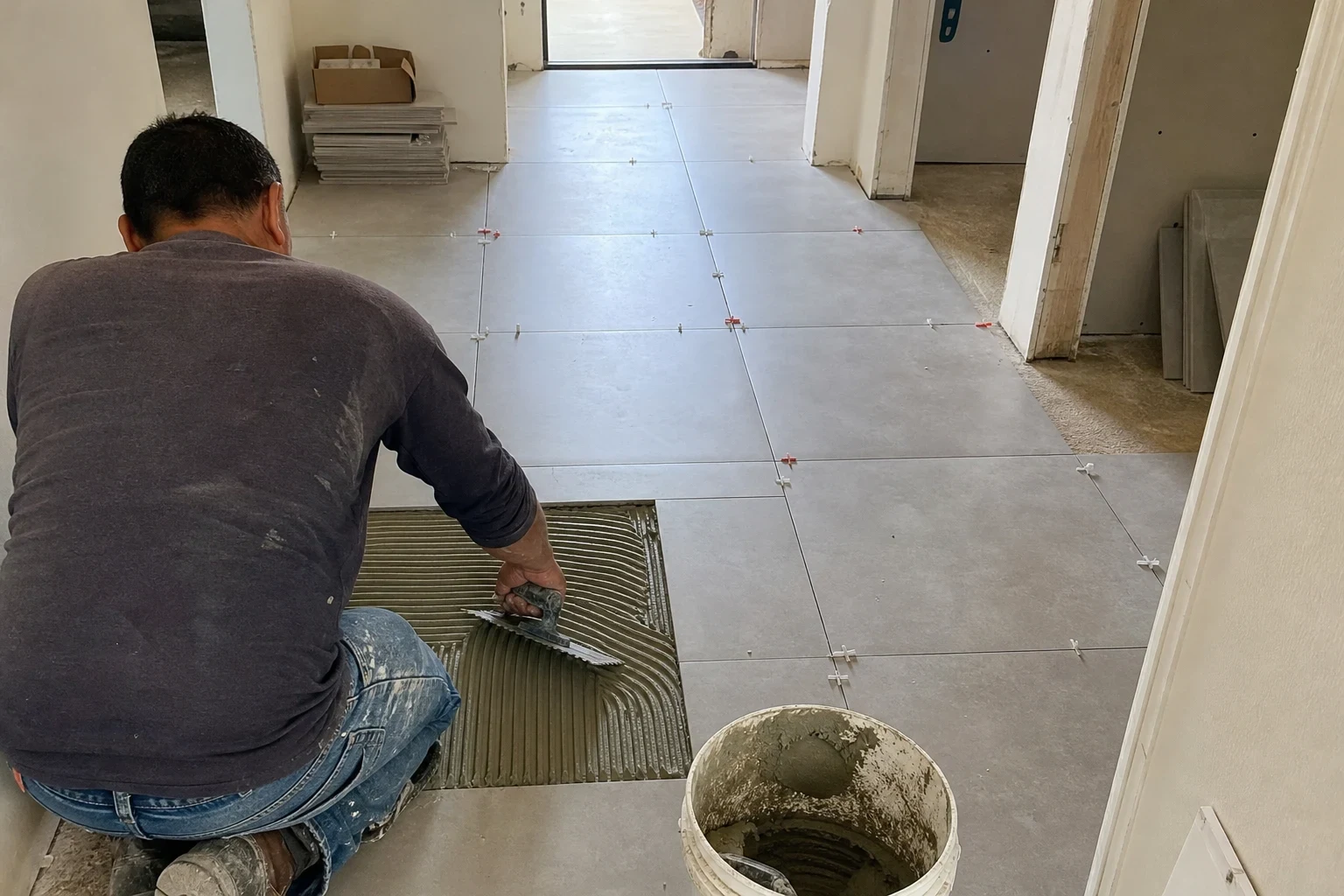
Before anything is set, we lay out loose rows and mark reference lines. We plan the cuts so narrow slivers end up tucked along walls and cabinet bases instead of right at a doorway. You see the layout and the pattern direction before we commit to it.
Setting, grouting and sealing
Tile goes down in thinset with the right trowel for its size, then gets grouted and cleaned. Cementitious grout is sealed once it cures, and we leave you the care instructions.
Transitions and trim
We finish edges where tile meets carpet, wood or vinyl with matching transition strips, and reset baseboards or add quarter round so the room looks complete.
Signs Your Floors Are Ready for New Tile
Hollow or cracked tiles
Walk the room and listen. A tile that sounds hollow underfoot has come loose from the thinset, and a cluster of cracks in one area often points to movement in the slab below.
Grout that is crumbling or dark
Grout that flakes out or stays stained after cleaning lets water into the joints. Over time that loosens tiles and can feed mildew.
Vinyl or carpet in wet rooms
Carpet in a bathroom or peeling sheet vinyl in a laundry room holds moisture and odors. Tile is a lasting fix for rooms that see water every day.
Dated tile you are tired of looking at
Small pink or almond squares from decades ago still work, but if they make the whole room feel old, a larger porcelain tile can change the space.
Lippage you trip over
Edges that stick up between tiles catch toes and broom bristles. That usually means the original setter skipped leveling.
How a Tile Job Runs, Start to Finish
- 1
Measuring and a look at your slab
Once we have talked by phone about the rooms and style you have in mind, we set up a visit. We measure, check the slab and go over tile options with you. Then you get a written estimate broken out by each part of the job.
- 2
Prep day
We move light furniture, protect cabinets and doorways, and remove the old floor. Then we grind, patch, level and lay membrane where the slab needs it.
- 3
Setting the tile
Tile goes down along the planned layout, with spacers and leveling clips for large pieces. Thinset needs time to cure, so we plan foot traffic around it and tell you which rooms are off limits and for how long.
- 4
Grout, seal and walk-through
We grout, clean the haze, seal and set trim. Before we leave, we walk the floor with you, vacuum up and make sure you know how to care for it.
What Shapes the Cost of a Tile Floor
Every tile job is priced from the actual rooms, not a flat rate. The tile you pick matters, but so does what we find under your current floor. We explain each line on the estimate so nothing on the final bill catches you off guard.
- Square footage and room shape
- Open, rectangular rooms go faster than kitchens with islands, closets and lots of angled cuts. More cuts mean more labor and a bit more tile for waste.
- Tile size and material
- Porcelain is harder to cut than ceramic. Large-format tiles need a flatter slab and often two people to set, while small mosaics take longer per square foot.
- Removing what is there now
- Pulling carpet is quick. Breaking up old tile set in mortar on concrete takes far more time and produces more debris to haul away.
- Slab condition
- A flat, sound slab keeps costs down. Cracks, high spots or old adhesive residue add grinding, leveling compound and membrane.
- Pattern and finishing details
- Herringbone or diagonal layouts use more tile and time than a straight lay. Transitions, thresholds and baseboard work also factor in.
Tile Flooring Questions We Hear Often
Something not covered here? (346) 597-8258
Will my new tile crack if the foundation moves?
Some slab movement is normal on clay soil, which is why we check for cracks and use a crack isolation membrane where it is needed. The membrane absorbs small shifts so they do not travel up into the tile. It cannot stop major foundation problems, and if we see signs of those, we will tell you before we start.
How long before we can walk on it?
Most rooms can take light foot traffic about a day after setting, once the thinset firms up. Grout needs a little more time, and we usually wait a few days before sealing. We give you clear timing for your specific tile and products.
Porcelain or ceramic: which should I pick?
For floors that see water or heavy traffic, we usually suggest porcelain because it is denser and more chip resistant. Ceramic works well in dry rooms and costs less in many lines. Bring us the rooms you have in mind and we will help you match tile to each one.
Is it possible to lay new tile on top of the old tile?
It can work when the old floor is flat and every tile is still firmly stuck down. The trade-off is extra height, which can leave doors dragging and a dishwasher wedged under the counter. For most homes we suggest tearing the old tile out so we can see the slab and repair it. We will check your floor and tell you plainly which way makes sense.
Will tile feel cold in the winter?
Tile does feel cooler underfoot than carpet or wood, which many people appreciate during long hot summers. Area rugs help in bedrooms and living rooms. If softness matters most, we can also show you carpet or vinyl options.
Thinking About Tile for Your Home?
Give us a ring and let us know which rooms you have in mind and what you would like to change about them. We will pick a time to stop by, check the slab and look at tile options with you, with the same care we would give a neighbor's house.