ServicesHardwood Flooring
Hardwood Flooring in Missouri City
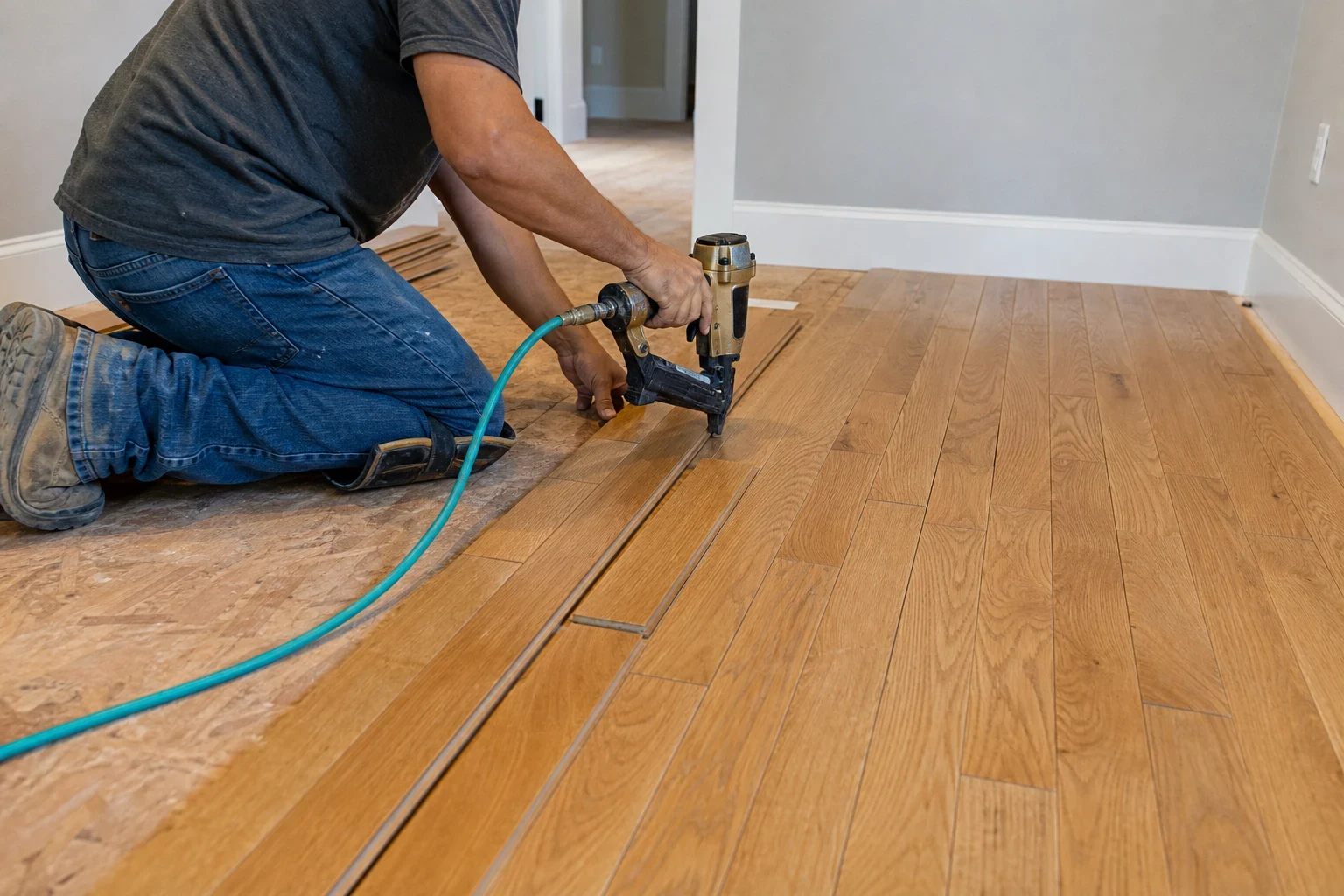
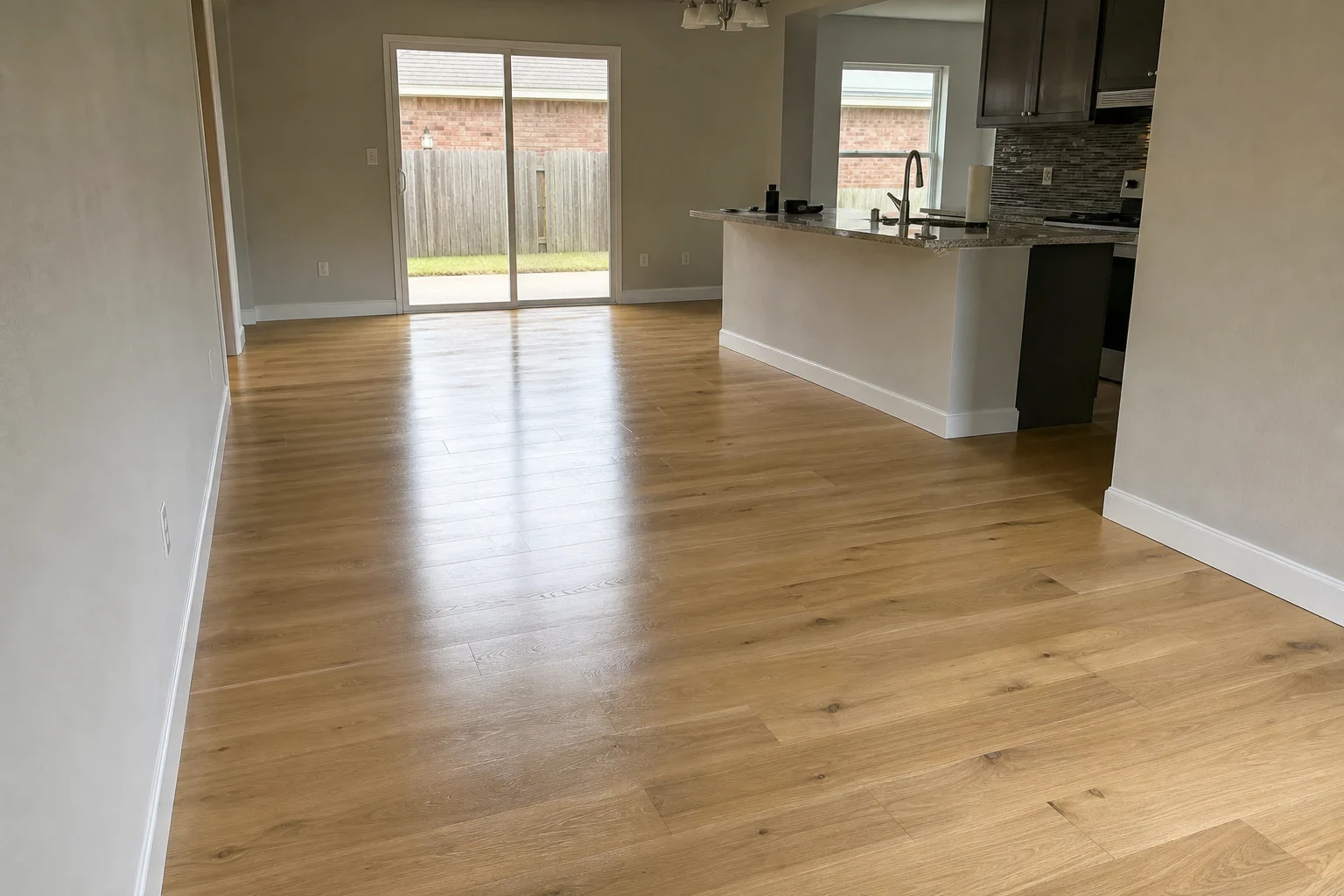
We install solid and engineered hardwood the way we would in a friend's living room. We test the slab, prep the subfloor properly and leave your home clean. You get a warm wood floor that stays flat and quiet for years.
Real Wood, Installed for the Floor Underneath It
Hardwood looks simple once it's down. Getting it to stay that way depends on what happens before the first board goes in. Wood takes on moisture and gives it back, so it grows and shrinks a little with the seasons. A good install leaves room for that movement and keeps moisture from coming up from below.
Concrete slab foundations are the norm in Missouri City, and the air stays damp for a good part of the year. Put those two together and engineered hardwood is usually the better pick for slab rooms. It has a real wood wear layer over a stable core, and it can be glued down or floated over concrete. Solid hardwood still makes sense over a plywood subfloor, and we'll tell you plainly which one fits your rooms.
If hardwood turns out to be the wrong call for a space, like a laundry room or a bathroom, we'll say so and walk you through luxury vinyl plank or tile flooring instead.
What Your Hardwood Install Includes
- Moisture testing before anything else
- We check the concrete or wood subfloor for moisture and write down the readings. If the numbers are high, we talk about a vapor barrier or a moisture-blocking adhesive before you commit to anything.
- Help choosing species, width and finish
- Oak, hickory and maple wear differently, and wide planks move more than narrow ones. We bring samples and explain how each holds up to kids, pets and sunlight.
- Removing the old floor
- We pull up carpet, laminate or tile and haul it away. Tile removal is dusty work, so we seal off the room and protect the rest of your home.
- Subfloor leveling
- We grind down high spots and fill low ones with leveling compound. A flat base is what keeps boards from flexing, clicking or separating later.
- Trim, transitions and details
- Expansion gaps get covered with baseboard or quarter round, and we fit transitions where hardwood meets tile or carpet. Door casings are undercut so boards slide in cleanly.
Signs It's Time for New Hardwood
Carpet that holds on to everything
Stains, allergens and pet odor that keep coming back are a good reason to switch to a hard surface you can sweep and mop.
Boards that are cupping or gapping
Edges lifting higher than the centers usually point to moisture from below. We find the cause before putting new wood down.
Soft or bouncy spots
A floor that gives underfoot can mean a failing pad, loose boards or a subfloor problem. It's worth looking at before it gets worse.
Dated or mismatched rooms
Three different floors across one open area can make a home feel choppy. Running one hardwood floor through connected rooms ties them together.
How a Hardwood Job Runs
- 1
A visit to measure and test
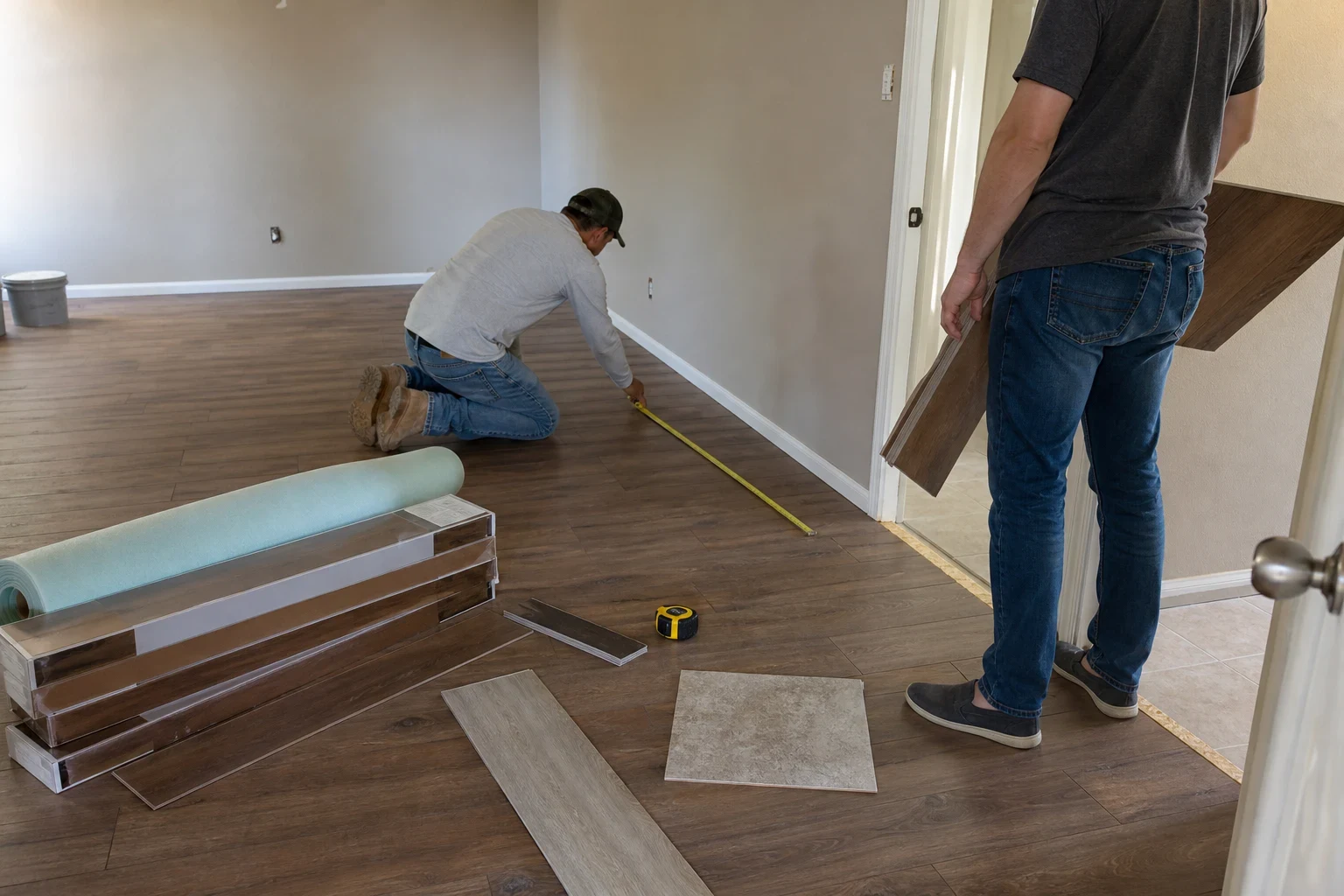
We come to your home, measure every room and take moisture readings. You'll see the numbers and hear what they mean for your choices.
- 2
Letting the wood settle in
Once your flooring arrives, we bring it inside so it can adjust to your home's temperature and humidity before installation. We ask that you keep the air conditioning running as you normally would.
- 3
Prep day
We protect walkways, remove the old floor and level the subfloor. Most of the dust and noise happens here, and we keep it contained to the work area.
- 4
Installation
Boards go down glued, floated or nailed depending on the subfloor. We stagger the seams so the floor looks natural and leave the right gap at the walls.
- 5
Walkthrough and cleanup
We vacuum, wipe down the new floor and walk it with you. We also go over care basics, like felt pads under furniture and keeping water off the boards.
What Moves the Price of Hardwood Flooring
Every hardwood job is priced from your actual rooms, not a rough guess. The wood itself is only part of the cost. Prep, removal and layout often matter just as much, and we explain each piece by phone and in person so nothing surprises you.
- Square footage and layout
- Open rectangular rooms go quickly. Closets, hallways, angled walls and lots of doorways take more cuts and more time.
- Solid or engineered, and the species
- Wear-layer thickness, plank width and species all change the material cost. Wide planks and harder woods usually cost more.
- Condition of the subfloor
- A slab that needs grinding, leveling or a moisture barrier adds labor and materials. We won't know until we test, which is why we measure first.
- What's coming up
- Pulling carpet is fairly quick. Removing glued-down tile or old adhesive takes much longer and creates more debris to haul away.
- Stairs and transitions
- Stair treads, risers and nosing are detailed work. Our stair flooring page covers that in more depth.
Hardwood Flooring Questions
Something not covered here? (346) 597-8258
Can real hardwood go on a concrete slab?
Yes, in most cases. Engineered hardwood is the usual choice for slabs because its layered core resists the swelling that solid boards can have over concrete. We test the slab's moisture first and recommend a barrier or adhesive based on what we find.
Will hardwood hold up in my kitchen?
It will, provided spills get wiped up quickly and a mat sits in front of the sink. Kitchens see more water than any other room, so plenty of people put hardwood in the living areas and choose tile flooring or luxury vinyl plank for the kitchen. We'll lay out the tradeoffs honestly so you can decide.
How long does installation take?
A single room is often done in a day or two once prep is complete. A whole downstairs takes longer, especially if old tile has to come out or the slab needs leveling. We give you a realistic timeline at the measuring visit.
Do I need to move out while you work?
Usually not. You'll want to stay out of the rooms we're working in, and removal days can be loud. We seal off the work area and keep a clear path through the rest of your home.
How do I keep hardwood looking good with pets?
Claws mostly mark the finish, so the wood and sheen you pick make a real difference. A dense wood such as hickory takes fewer dents, and a low-sheen or textured surface keeps light scratches from catching the eye, while a shiny finish on a soft wood shows nearly every mark. Trimming nails regularly and laying a runner where your dog runs most will also help the floor last.
Let's Talk About Your New Hardwood Floor
Tell us which rooms you're thinking about and what's down there now. We'll explain your options and set up a time to measure and test.